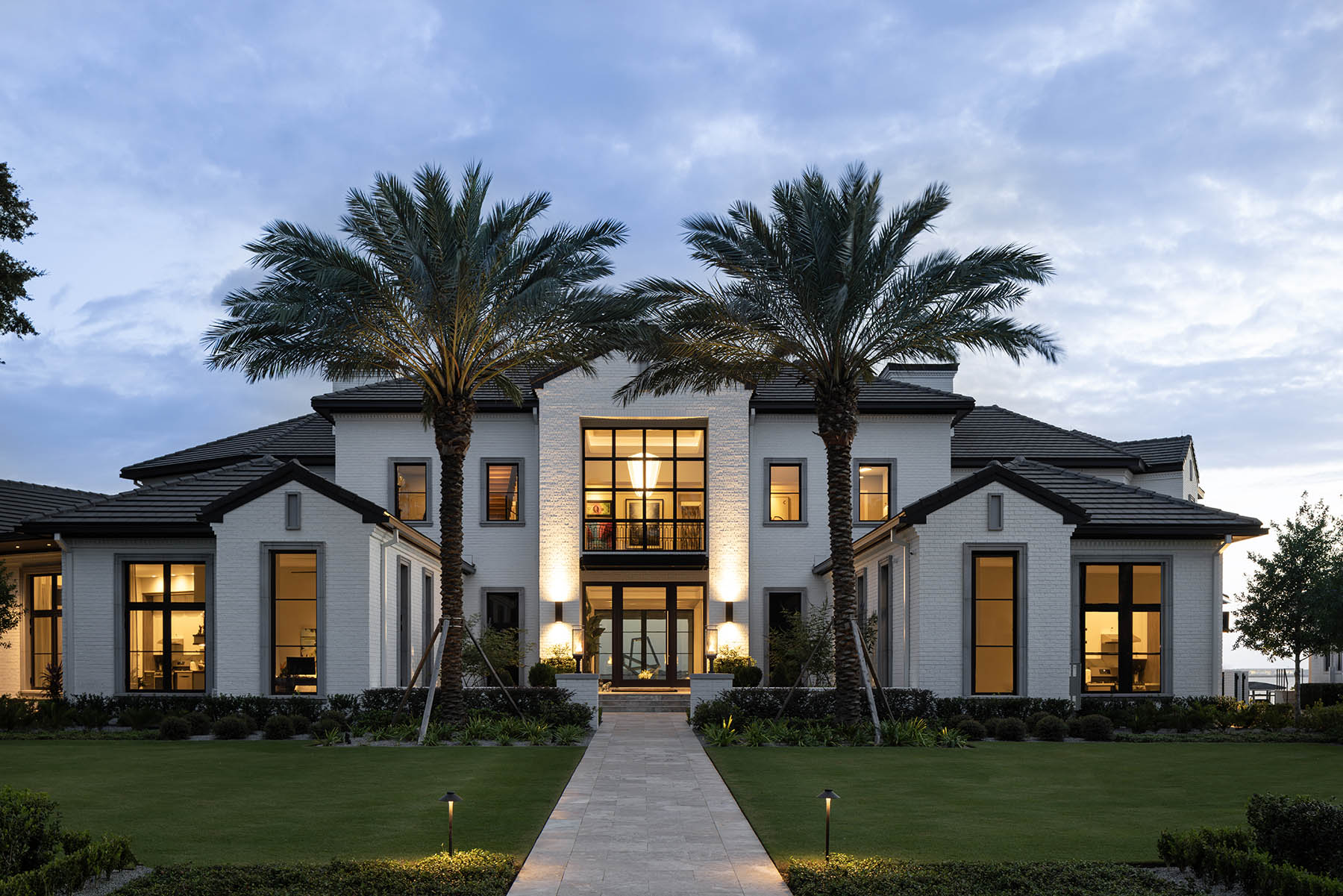
Building a luxury custom home is arguably one of the biggest emotional and financial commitments you’ll ever make. You start with a vision, but between that dream and the day you move in, there is a massive gap filled with budgets, supply chains, and thousands of micro-decisions.
We recently sat down with Tommy Watkins, President of Phil Kean Design Group, to talk about how to bridge that gap without losing your mind—or your budget.
For Tommy, the secret isn’t just about picking the right tiles; it’s about the Design-Build process. Here is what that actually means for you, and why he believes it’s the only way to build.
The “No Finger Pointing” Rule
If you are new to custom building, you generally have two options: Design-Bid-Build or Design-Build.
In the traditional Design-Bid-Build model, you hire an architect to draw plans, and then you shop those plans around to builders. The problem? The builder doesn’t see the plans until they are done. If the design is over budget or structurally complex, you often don’t find out until it’s too late.
Design-Build is different. At PKDG, architecture, interior design, and construction are all under one roof.
“There’s no finger-pointing,” Tommy explains. “If there’s a mistake or error on the plans, the only finger we can point is at ourselves. Everything is taken care of in-house.”
This means the construction team is in the room from day one. They aren’t just building what is drawn; they are helping shape the design to ensure it’s actually buildable and fits your budget.
Value Engineering: Catching Costs Before They Happen
The biggest advantage of having your builder involved during the design phase is something called value engineering.
This isn’t about cutting corners or choosing cheap materials. It’s about being smart with where the money goes before the blueprints are finalized. Tommy’s team runs preliminary cost estimates during the design phase, not after.
Real-World Examples
Tommy gave us a great example regarding window packages. If a design comes in over budget, the team can look at the glass walls.
“If we reduce a floor-to-ceiling sliding glass door from 10 feet to 8 feet, we can see substantial savings without sacrificing the modern aesthetic,” he says.
The same goes for structural elements. On coastal properties, the team can evaluate foundation options—auger cast piles versus helical piles, or wood floors versus concrete systems—to find the sweet spot between durability and cost.
“The key is catching these things early,” Tommy notes. “If you wait until construction documents are done and the home comes in over budget, you have to re-engineer everything. That costs time and money. If we catch it early, we pivot.”
The Sticker Shock: What Costs More Than You Think?
We asked Tommy what surprises clients the most when they see the numbers. His answer was immediate: Windows and Pools.
The Glass Factor
“The window package is something that kind of shocks clients,” Tommy admits.
When you are building on the coast, windows aren’t just glass. They have to be impact-rated for hurricanes. In many areas, they also need to be “turtle glass” (specialized tinting to protect nesting sea turtles). When you combine that with the expansive, indoor-outdoor style PKDG is famous for, the costs add up fast.
The New Cost of Pools
Before 2020, a standard rectangular pool might have cost $50,000 to $75,000.
“Today? You’re looking at $100,000 to $125,000 minimum,” Tommy says. “The cost of steel and materials went up dramatically during COVID, and we haven’t seen those prices come back down. I don’t think we ever will.”
Is Inflation Still a Problem?
The construction industry took a massive hit between 2021 and 2022, seeing a nearly 40% increase in costs. It was a chaotic time of material shortages and logistical nightmares.
The good news? Things have stabilized.
“We’re back to normal now,” Tommy assures. “Lead times have stabilized, shortages have eased, and we’re seeing typical 2-3% annual increases again.”
Managing Expectations (and Anxiety)
Beautiful designs win awards, but clear communication builds trust. Tommy emphasizes that the PKDG process relies on being brutally honest from the very first meeting.
If a client brings in photos of a massive modern glass estate, the team addresses the cost per square foot immediately.
“We ask: ‘Are you comfortable with that?’” Tommy says. If the answer is yes, full steam ahead. If not, they adjust the footprint or style immediately—before money is wasted on drawings that can’t be built.
The Friday Update
Once construction starts, communication is everything. PKDG sends a detailed report every Friday. It covers what happened on-site that week, the current status, and what is happening next week.
“We want our clients to be happy,” Tommy says. “Time is money. The longer a project drags on, the more costs you incur—insurance, dumpster fees, job support. Sometimes the best way to save money is to make a decision quickly and keep the schedule on track.”
The Bottom Line
The Design-Build model is ultimately about peace of mind. It’s about knowing that the person drawing your home and the person building it are on the same team, working toward the same goal.
At Phil Kean Design Group, that goal is simple: delivering a “well-bred home and a highly crafted build” without the headaches of the traditional process.
Dreaming about your custom residence? Whether you are looking for a coastal modern masterpiece or an inland estate, we’d love to help you navigate the process. Contact Phil Kean Design Group today to start the conversation.